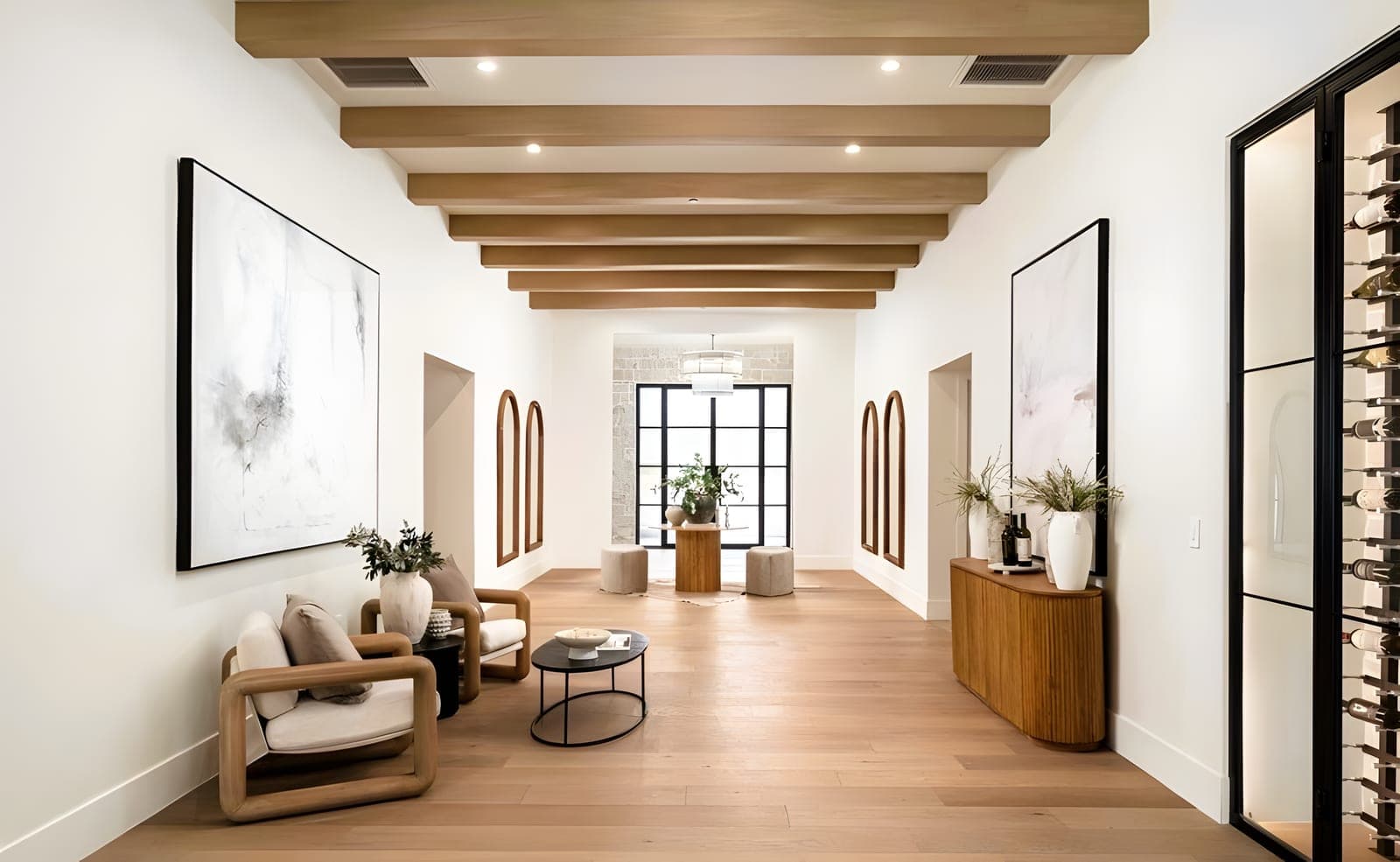
Situation
When the scope of a renovation extends beyond one or two rooms, the risk shifts. Individual rooms can be beautiful on their own terms. The harder problem is making five or six rooms — each with a different function and a different set of material demands — read as one project, not a collection of unrelated renovations by the same contractor.
This home's public and utility spaces needed the same level of attention that the private rooms received. The entry sets the tone for every visitor. The great room is where the family actually lives. The office needed to function for real work, not just photograph well. And the guest bath and laundry — rooms that get less design attention in most projects — still needed to belong to the same house.
Challenge
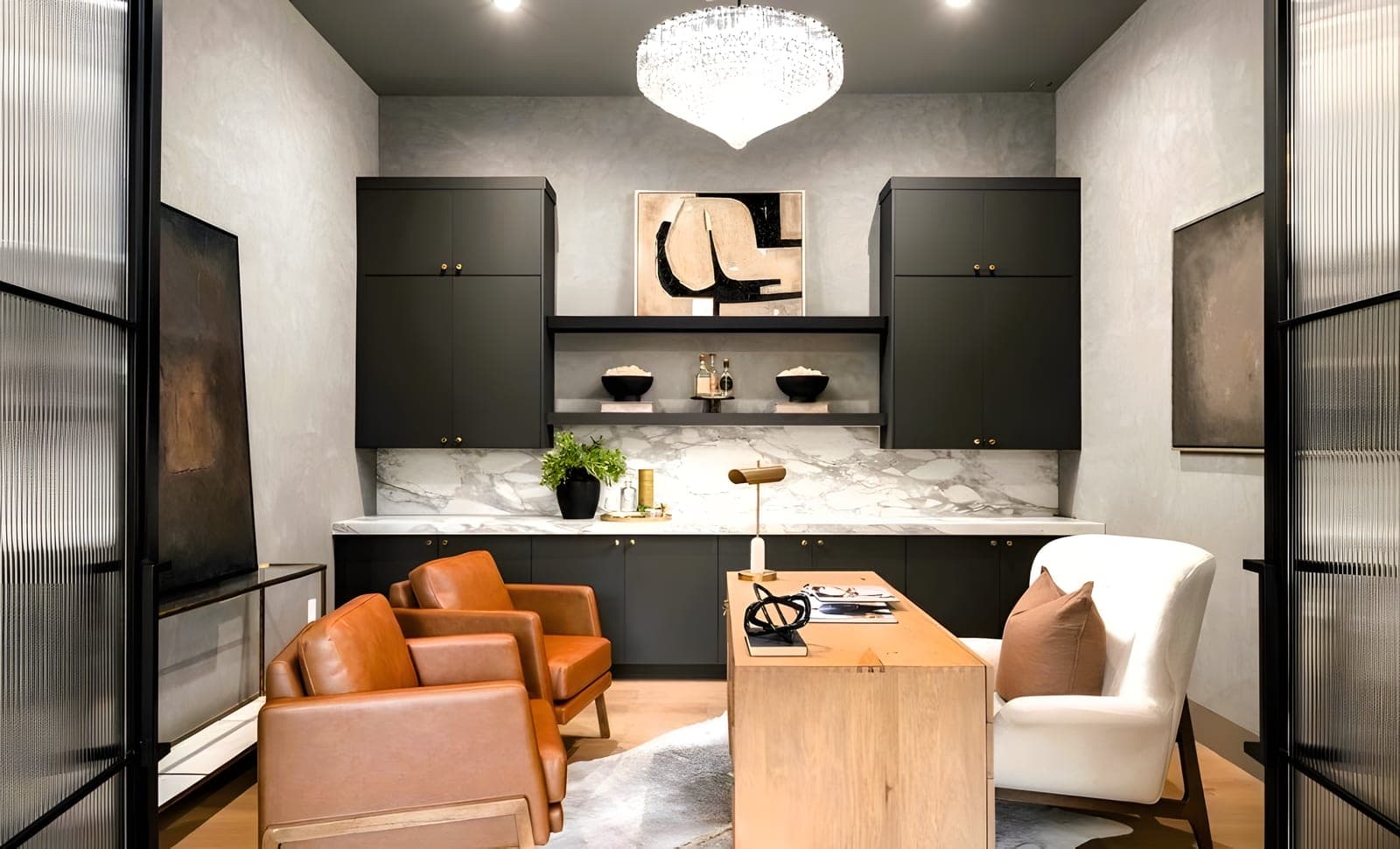
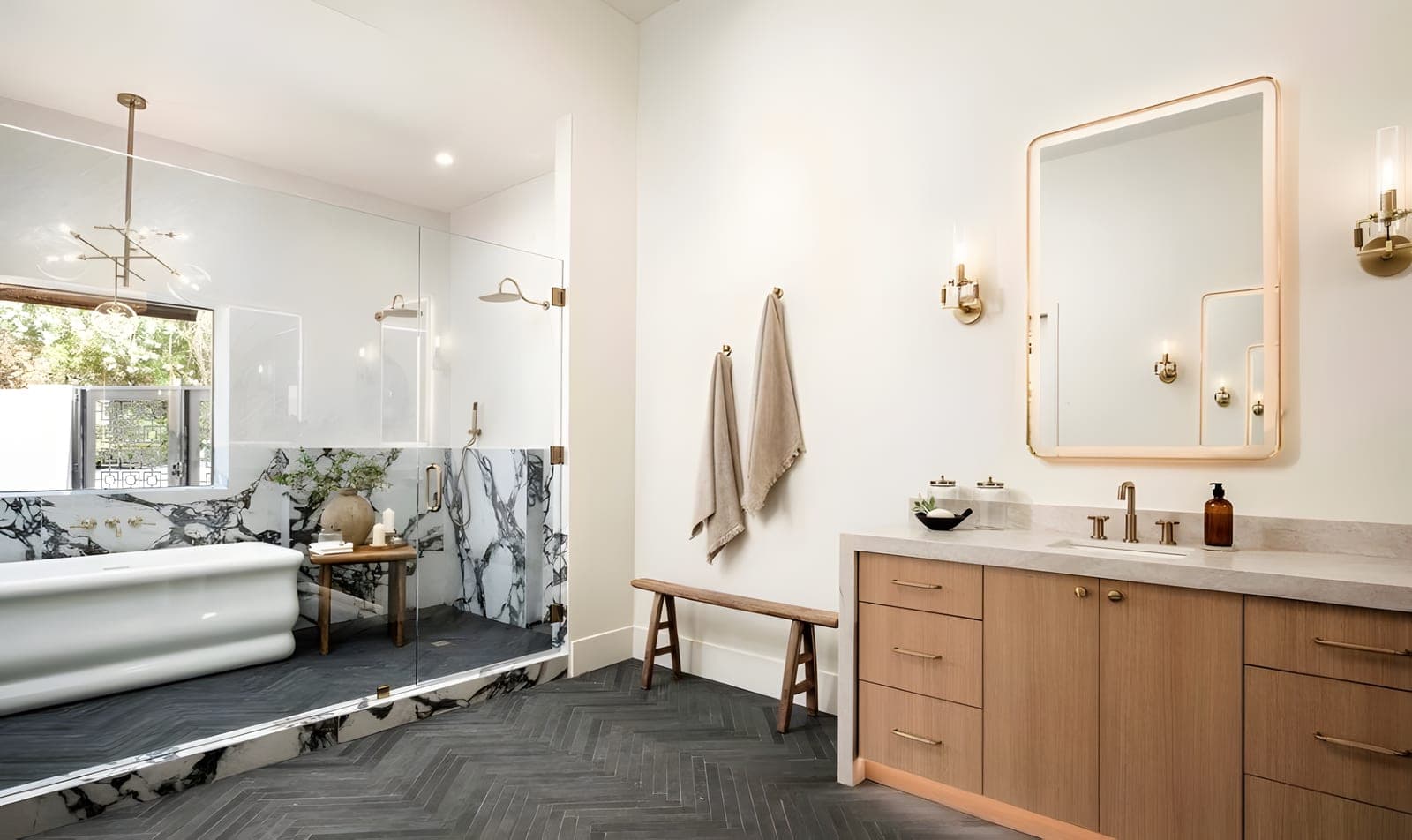
The material palette had to flex across five very different rooms without losing coherence. White oak and brass anchor the public spaces — entry gallery, great room — but the office called for something darker and more contained: painted cabinetry, calacatta marble, crystal, leather. The guest bath introduced a third vocabulary entirely: calacatta viola marble in a full wet room, herringbone tile on the floor, brass fixtures that tie back to the rest of the home.
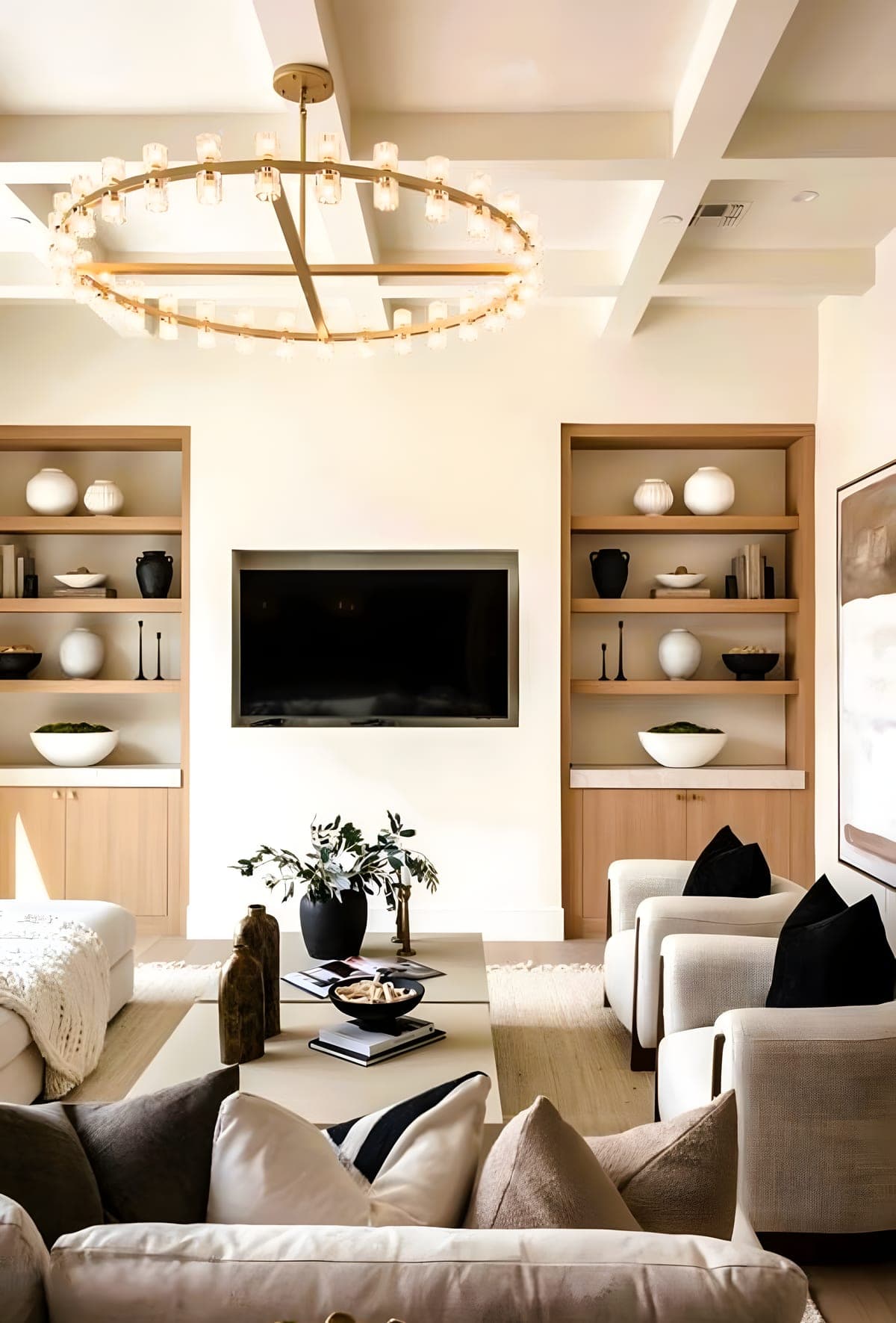
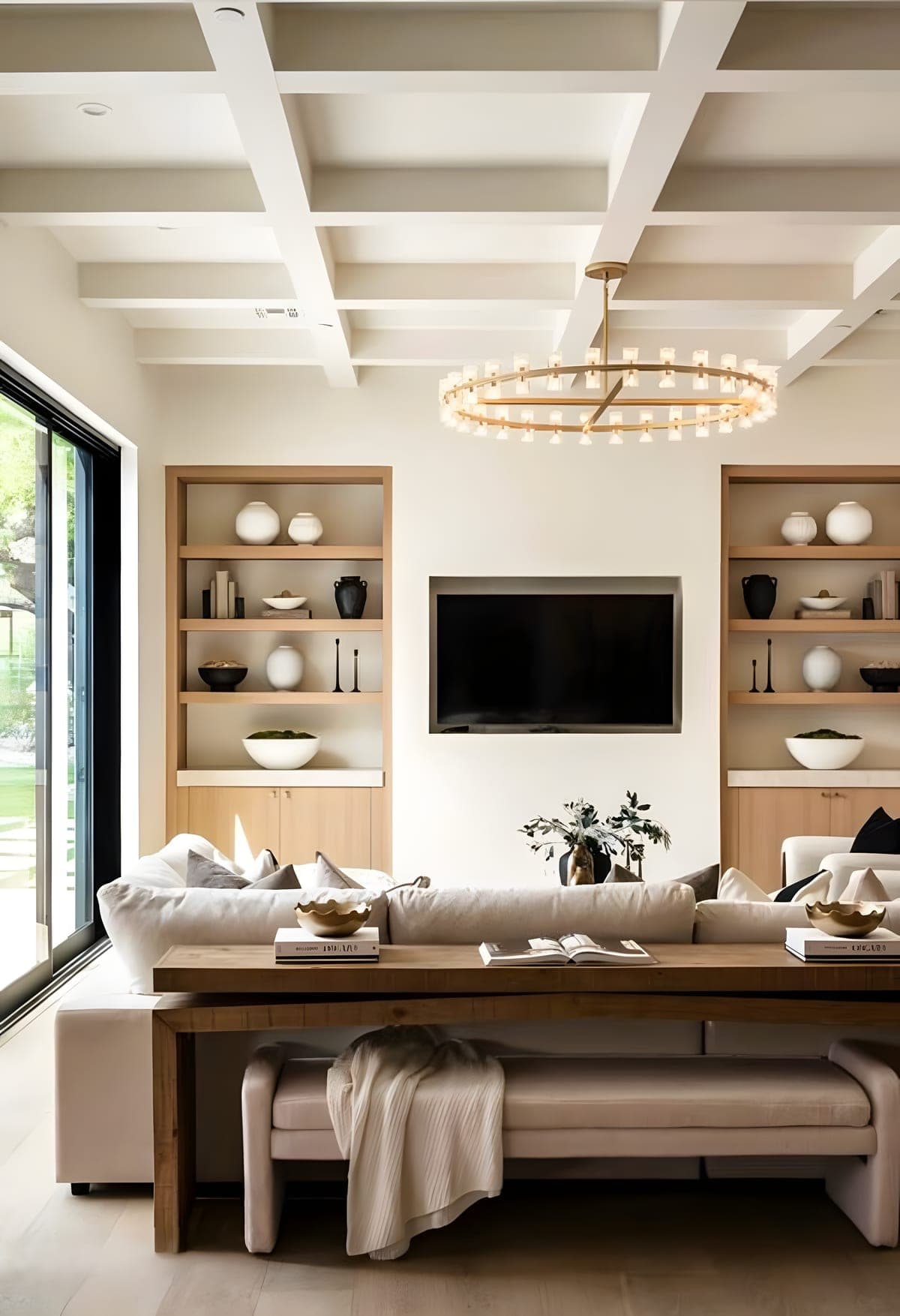
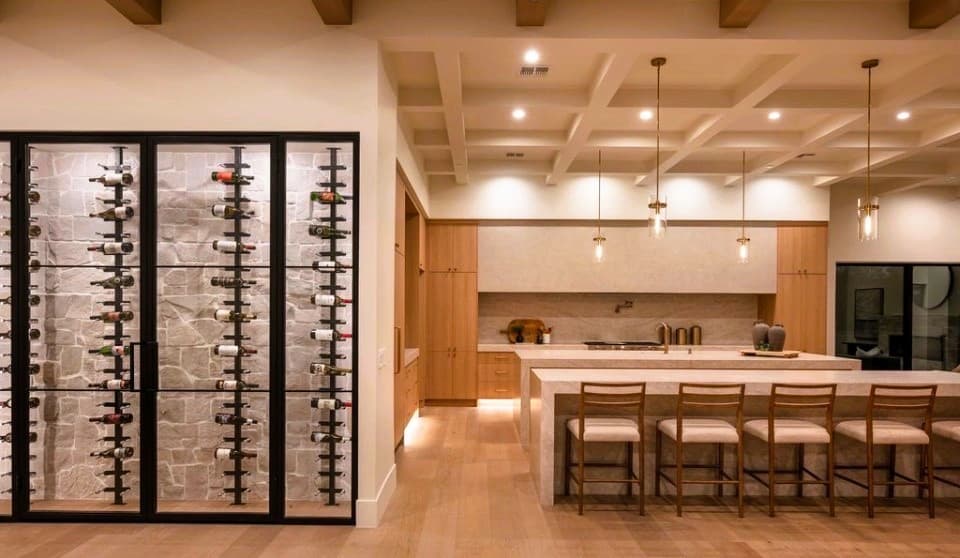
Each room also presented specific technical requirements. The entry gallery's exposed beam ceiling and arched wall niches required precise framing and plaster work. The great room's built-in shelving — flanking a TV niche with a ring chandelier overhead — needed structural backing and integrated cable management behind finished oak faces. The office's fluted glass partition doors were custom-fabricated to slide rather than swing, preserving floor space without sacrificing the light they let through.
Approach
We sequenced the work by zone, starting with the entry gallery — the space that every other room connects to — and working outward. Framing for the arched niches and beam ceiling came first, followed by the great room's coffered ceiling and built-in millwork.
The office was built out as a self-contained room: dark-painted cabinetry with calacatta marble as a backsplash, a crystal chandelier scaled to the room rather than borrowed from the rest of the home's fixture language, and cognac leather chairs at the desk. The fluted glass doors close it off visually while still passing light from the hallway.
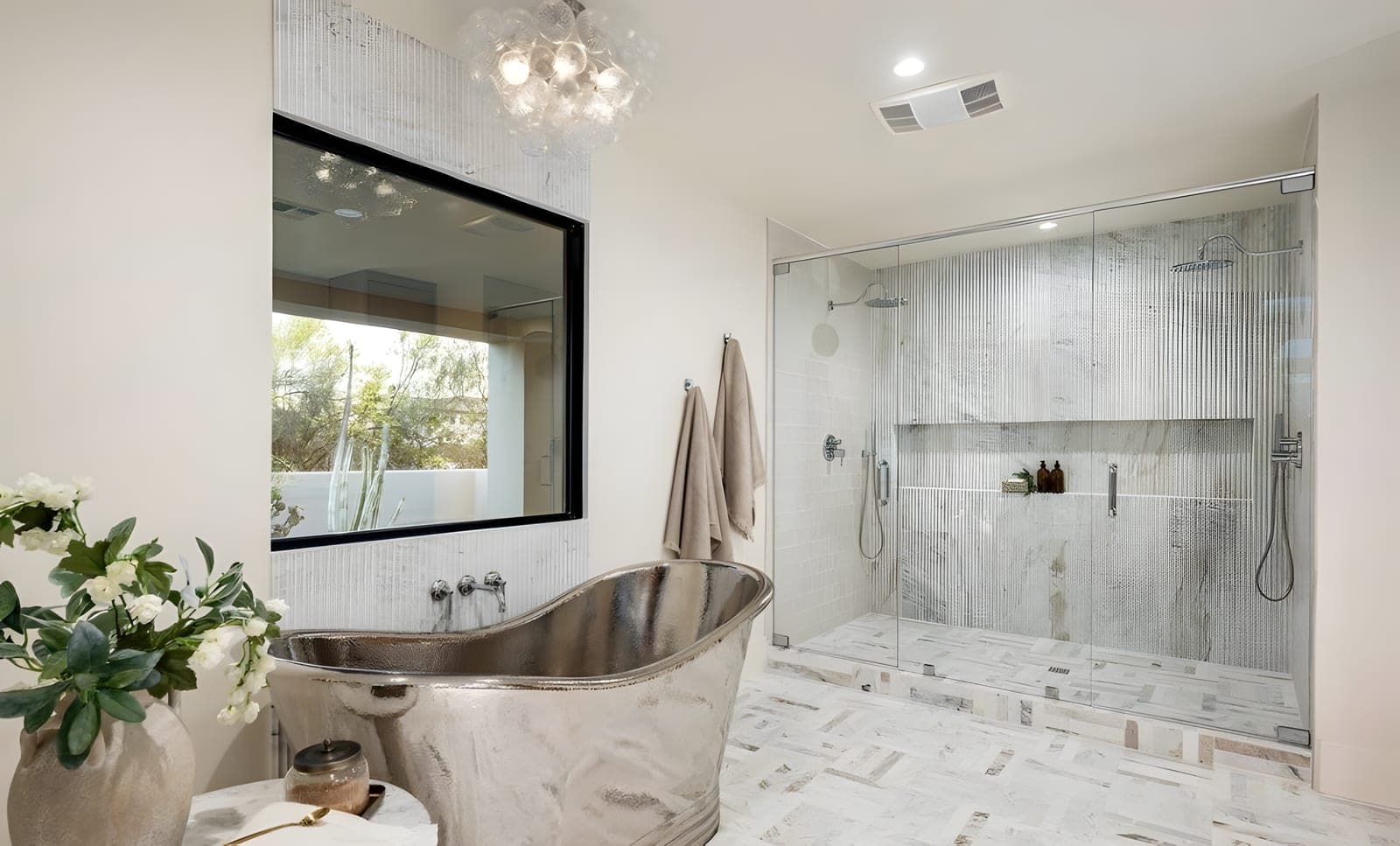
The guest bath received a full wet room treatment — calacatta viola marble on the walls, herringbone tile on the floor, brass rain shower and wall-mount faucet. The material palette here is deliberately different from the primary bath's chrome and zellige. Showing range within a single home — executing two distinct bath vocabularies at the same quality level — demonstrates capability more than repeating the same look twice.
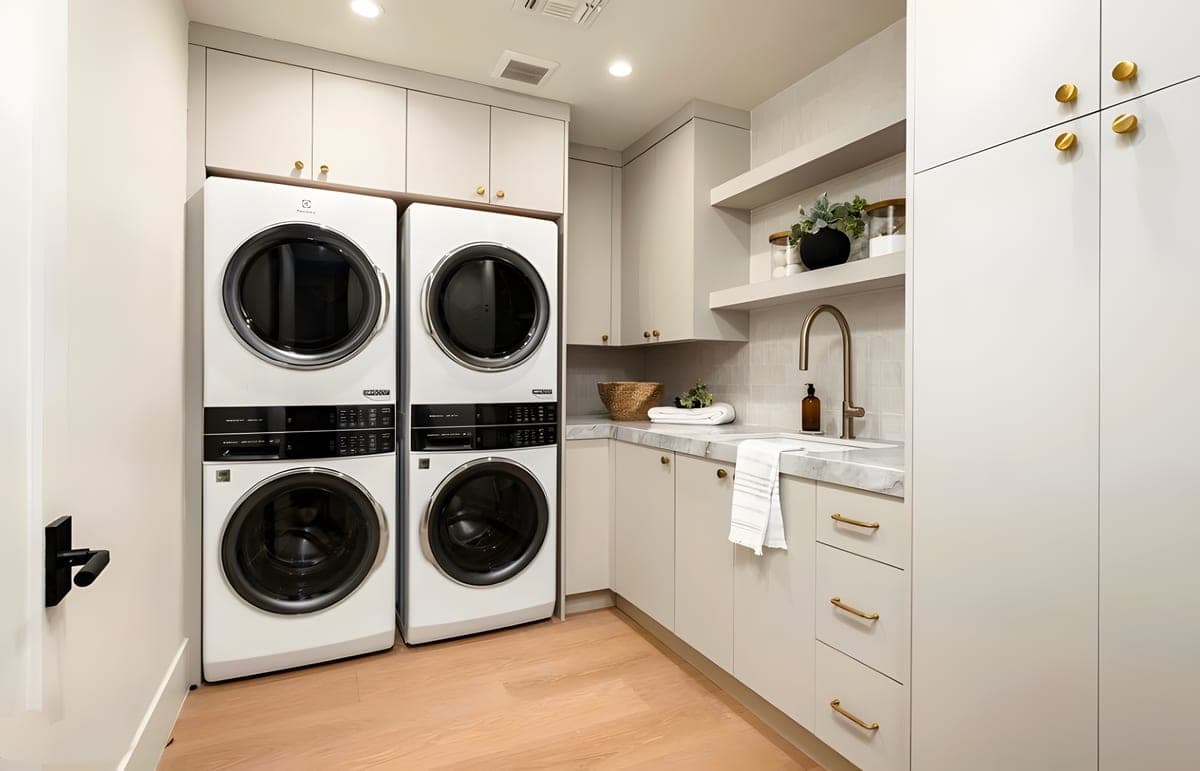
The laundry room closed out the scope: dual stacked units, custom cabinetry matching the home's brass hardware, a marble counter with utility sink. It's a working room that doesn't look like an afterthought.
Outcome
Five rooms, three distinct material palettes, one material language. The brass hardware, the oak flooring, and the commitment to custom millwork in every room — including the laundry — tie the spaces together. The entry gallery anchors the home's first impression. The office proves the palette can go dark and formal without losing the thread. The guest bath proves it can go full marble without losing warmth. Nothing feels like filler.